严济慈
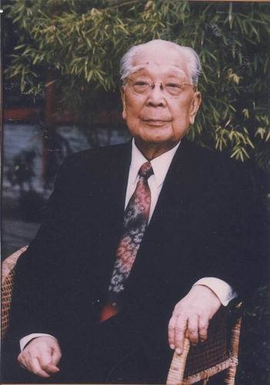
严济慈(1901.1.23-1996.11.2),谱名泽荣,学名寓慈、济慈,字华庭、慕光,号子祥、厂佛、岸佛。浙江东阳人。南京大学物理学院著名校友。中央研究院院士。著名物理学家、教育家,中国现代物理学研究开创人之 一。
1901年1月23日,严济慈出生于浙江省东阳县下湖严村的一户农家。由于家境清贫,严济慈的童年几乎是在艰辛的劳作中度过的。1908年,严济慈进入严氏宗祠蒙馆读书,作为家中的长子,严济慈有幸入学读书,他也是姐妹兄弟五人中唯一上学的。
1918年夏,严济慈参加全国六大学区高师联考,以浙江省第一名的成绩考入南京高等师范学校(同时还考取了免交学费但需食宿自理的河海工程学校)物理系(现为南京大学物理学院),是家乡第一名考上著名大学的学生,为此,当时浙江省教育厅将东阳中学列为重点中学。
1923年后,自费从上海赴法国留学,在法国巴黎大学学习,仅用一年时间,就同时考得巴黎大学3门主科微积分学、理论力学和普通物理学的文凭,于1925年夏获数理硕士学位,1927年获法国国家科学博士学位。
1927年,回国任上海大同大学、中国公学,暨南大学和南京国立第四中山大学(由原国立东南大学等校合并成立)物理、数学教授,并兼任正拟建中的中央研究院理化实业研究所筹备委员。
1978年3月1日,中国科技大学研究生院在北京正式成立,严济慈出任中国第一所研究生院的首任院长。1980年1月,加入中国共产党;同年2月,继郭沫若之后出任中国科学技术大学第二任校长。
1988年5月,严济慈为学校中国科学技术大学建校30周年题词:"创寰宇学府,育天下英才"。这句话高度凝炼,大气磅礴,寄托了老校长的深情厚望,为学校提出了新的宏伟目标。1996年11月2日,严济慈在北京逝世,终年96岁。
在做学问方面,严济慈提倡"敢于好高骛远,善于实事求是",反复强调科学研究的核心是创新。在压电晶体学、光谱学、大气物理学、应用光学与光学仪器研制等方面取得重要成果。
严济慈鼓励科学工作者要专心致志,刻苦钻研,甚至有所牺牲。他视尊重和捍卫科学为自己的天职,有着特殊的敏感和毫不妥协的战斗精神,到处说,只有经过大量重复实验,得到相同结果,才是科学。在做事方面,遵循着"我们做物理,宜求有益于人民,造福于人类"的原则。
【科学思维:中国现代物理研究的开创人之一-严济慈】
Yan Jici (January 23, 1901 - November 2, 1996), with the genealogical name Zherong, the formal names Yuci and Jici, the courtesy names Huating and Muguang, and the pseudonyms Zixiang, Changfo, and Anfo, was from Dongyang, Zhejiang. He is a well - known alumnus of the School of Physics at Nanjing University and an academician of the Academia Sinica. He is a famous physicist and educator, and one of the pioneers of modern physics research in China. On January 23, 1901, Yan Jici was born into a peasant family in Xiahu Yan Village, Dongyang County, Zhejiang Province. Due to the poor family situation, Yan Jici's childhood was almost spent in arduous labor. In 1908, Yan Jici entered the private school in the Yan Family Ancestral Hall. As the eldest son in the family, Yan Jici was fortunate enough to go to school, and he was also the only one among the five siblings to receive an education. In the summer of 1918, Yan Jici participated in the joint entrance examination for higher normal schools in the six major educational districts across the country. He was admitted to the Department of Physics of Nanjing Higher Normal School (now the School of Physics at Nanjing University) with the first - place score in Zhejiang Province (he was also admitted to the Hohai Engineering School, which waived tuition fees but required students to cover their own accommodation and meals). He was the first student from his hometown to be admitted to a famous university. For this reason, the Education Department of Zhejiang Province at that time listed Dongyang Middle School as a key middle school. After 1923, he went to France to study at his own expense. He studied at the University of Paris in France. In just one year, he obtained diplomas in three major subjects at the University of Paris: calculus, theoretical mechanics, and general physics. He received a master's degree in mathematics and physics in the summer of 1925 and a Doctor of Science degree from the French state in 1927. In 1927, he returned to China and served as a professor of physics and mathematics at Shanghai Datong University, China Public School, Jinan University, and the National Fourth Sun Yat - sen University in Nanjing (formed by the merger of the former National Southeast University and other schools). He also served as a preparatory committee member of the Institute of Physics and Chemistry of the Academia Sinica, which was being planned. On March 1, 1978, the Graduate School of the University of Science and Technology of China was officially established in Beijing, and Yan Jici became the first president of China's first graduate school. In January 1980, he joined the Communist Party of China. In February of that same year, following Guo Moruo, he became the second president of the University of Science and Technology of China (USTC). In May ,1988, Yan Jici inscribed a message for USTC on the occasion of its 30th anniversary: "Create an institution of higher learning that spans the world and cultivate outstanding talents across the globe." This highly concise yet magnificent statement expresses profound hopes from the former president and sets a new and ambitious goal for USTC. On November 2 ,lgg6,YanJici passed awayinBeijingattheageof96. In terms of academic research, Yan Jici advocated "daringly aiming high and being good at seeking truth from facts" and repeatedly emphasized that the core of scientific research is innovation. He achieved important results in piezoelectric crystallography, spectroscopy, atmospheric physics, applied optics, and the developmentof optical instruments. YanJiciencouraged scientific workers to be dedicated ,studious ,and even willing tomake sacrifices. He regarded respecting and defending science as his bounden duty,with special sensitivityand uncompromising fighting spirit. He often said that only after a large number of repeated experiments with the same results can it be considered science. In doing things, he followedthe principle of "In our studyof physics, we should strive to benefit the people and bring well - being to humanity." [Scientific Thinking: One of the Pioneersof Modern Physics Researchin China - YanJici]
