
-
1 简要介绍
-
2 走进美赛
-
3 美赛规则参考
-
4 成功的实践与提示
-
5 论文评定结果
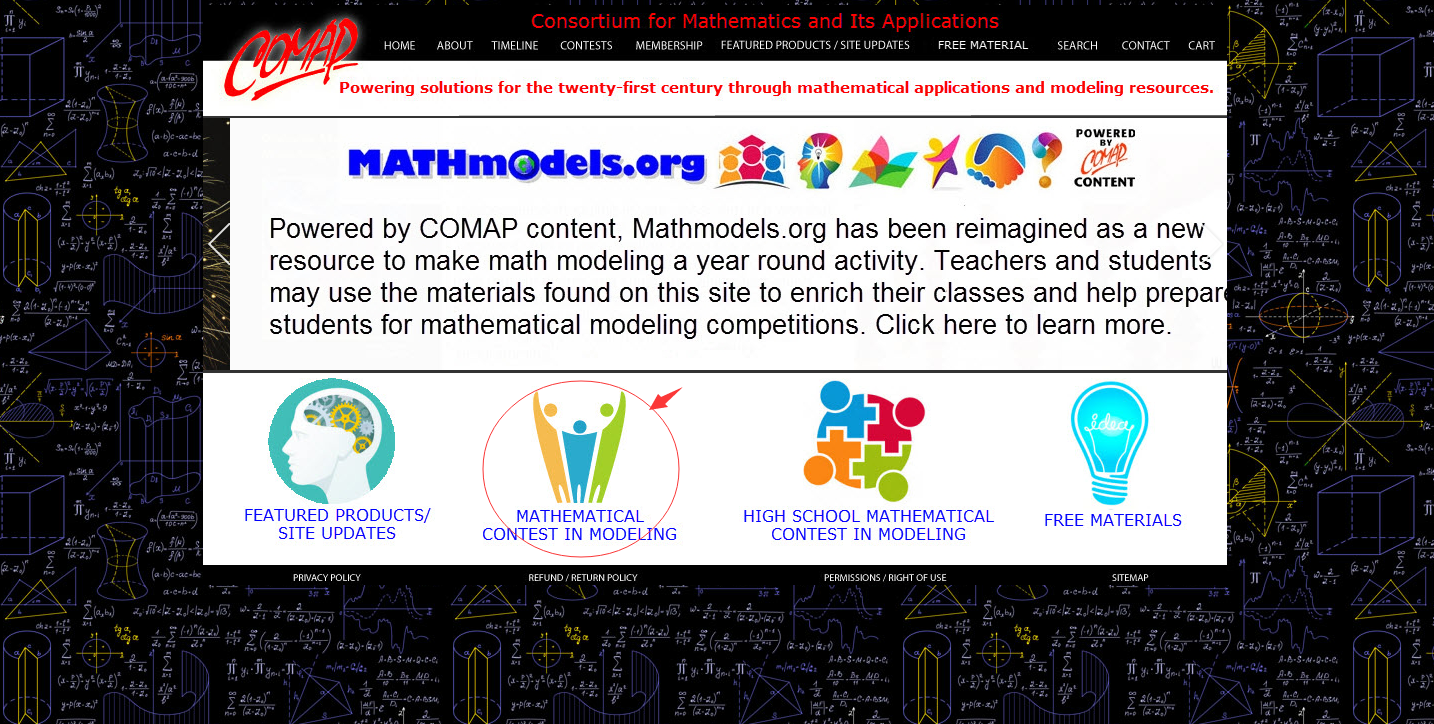
美国大学生数学建模竞赛(MCM/ICM)美国大学生数学建模竞赛由美国数学及其应用联合会主办,是唯一的国际性数学建模竞赛,也是世界范围内最具影响力的数学建模竞赛。MCM/ICM 着重强调研究问题、解决方案的原创性、团队合作、交流以及结果的合理性。赛题内容涉及经济、管理、环境、资源、生态、医学、安全、未来科技等众多领域。竞赛要求三人(本科生)为一组,在四天时间内,就指定的问题完成从建立模型、求解、验证到论文撰写的全部工作,体现了参赛选手对所研究问题的理解能力、提交解决方案的能力及团队合作精神。
COMAP's Mathematical Contest in Modeling (MCM) is Real World Mathematical Modeling where research, analytics and applied intelligence reign along with less-quantifiable factors like timing and luck.
COMAP的数学建模竞赛(MCM)是真实世界的数学建模,研究、分析和应用智能以及时间和运气等不太可量化的因素占据主导地位。
Mathematical Contest in Modeling (MCM), an international contest for high school students and college undergraduates. It challenges teams of students to clarify, analyze, and propose solutions to open-ended problems. The contest attracts diverse students and faculty advisors from over 900 institutions around the world.
大学生数学建模竞赛(MCM),一项针对大学本科生的国际竞赛。它要求学生团队澄清、分析并提出开放性问题的解决方案。该竞赛吸引了来自世界各地900多所院校的学生和教师顾问。
The Interdisciplinary Contest in Modeling (ICM), is an extension of the Mathematical Contest in Modeling (MCM). It is designed to develop and advance interdisciplinary problem-solving skills as well as competence in written communication.
跨学科建模竞赛(ICM)是数学建模竞赛(MCM)的延伸。该课程旨在培养和提高跨学科问题解决技能以及书面交流能力。
Turn theory into practice by entering COMAP's Mathematical Contest in Modeling (MCM). The study of mathematics as a subject in its own right may have started with Pythagoras, but people have been counting as a basic necessity of everyday life for thousands of years. It follows that mathematics was invented to help us understand and manage the world around us.
数学建模是理论知识向实践转换的桥梁:数学是人类理解世界的钥匙
What's in it for you? It's a chance to challenge your brain, solve a real world math problem, and get recognition for it on an international stage. It's an excellent opportunity to develop your interpersonal skills through teamwork. It's also an impressive resume credential and an advantage when applying for internships.
对参与人的意义:提供了挑战大脑、解决现实世界数学问题并在国际舞台获得认可的机会;也是一个通过团队合作培养人际交往能力的绝佳机会;为你提供令人印象深刻的简历,也是申请实习的一个优势。

