● Useful Language
What brings you here? | 你哪不舒服? |
I didn’t sleep a wink last night. | 我昨晚整夜没合眼。 |
drowsy | a. 昏昏欲睡的 |
pale | a. 脸色苍白的 |
supervisor | n. 主管人 |
can’t help but | 不得不 |
more often than not | 往往,多半 |
physical | n. 体检 |
a clean bill of health | 健康证明书 |
pound | vi. (心)剧跳 |
butterflies | 〈口〉 (因紧张引起的)颤抖;要呕吐的感觉 |
prolong | vt. 延长, 拖延 |
chronic | a. 慢性的, 长期的 |
manage stress | 调节压力 |
integrate | vt. 整合,同化 |
buffer | vt. 缓冲 |
stressor | n. 压力源 |
pace | vt. 使……有步骤 |
keep regular hours | 过有规律的生活 |
resume | vt. 恢复 |
prescription | n. 处方 |

● Watch the video clip, and then fill in each of the blanks with a proper word, based on your observations.
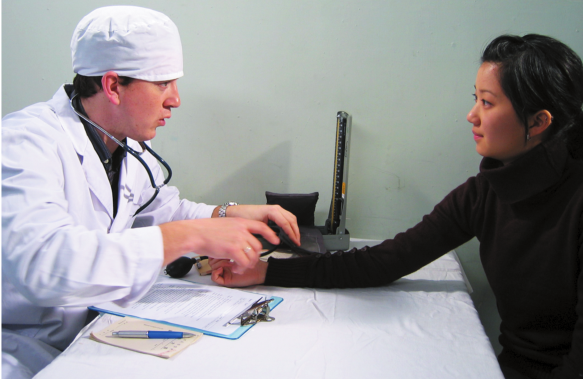
This is a clinic. The man in a white coat is a doctor there. He has a stethoscope (听诊器) around his neck. He is attending Shelley, who is feeling under the weather. On the desk there is a device called a blood pressure monitor, and the doctor is taking Shelley’s blood pressure with it. He is a good doctor because he is taking fine care of Shelley.

A. Watch the video and then decide whether each of the following statements is true (T ) or false (F ).
1) In the clinic, Shelley complains of (主诉) her sleep problem. (T)
2) Shelley has to smoke and drink to ease the nervous tension caused by her job. (F)
3) Shelley is presenting obviously stress-related signs (体征) and symptoms (症状) . (T)
4) According to the doctor, the most important thing for Shelley to do is to get along with her supervisor. (F)
5) The doctor advises Shelley to improve her health habits so as to manage stress better. (T)
B. Now watch the video again and then complete the following conversation.
Doctor: What brings you here ?
Shelley: I feel awful. I didn’t sleep a wink last night. And I’m always drowsy during the day. I can’t seem to stay awake at work.
Doctor: How long have you had the problem?
Shelley: Umm, for about three weeks.
Doctor: You look pale. Do you drink or smoke?
Shelley: Oh, yes. I’m under a lot of pressure. You know, my supervisor is very demanding. I just can’t help but drink and smoke after a day’s work.
Doctor: How often do you have to stay up late for extra work?
Shelley: More often than not.
Doctor: Hmm. Let me take your blood pressure. Relax. It’s 130 over 90. A little bit high for your age. When was your last physical?
Shelley: Six months ago. The doctor gave me a clean bill of health.
Doctor: I see. Do you often feel your heart pounding, your mouth dry or maybe have butterflies in the stomach?
Shelley: Yes, I do.
Doctor: OK, then I can tell you that it’s most likely a stress-related condition.
Shelley: Is it serious?
Doctor: Nothing to worry about. But prolonged, chronic stress can produce serious effects on your health. So you’d better learn how to manage stress.
Shelley: You mean to avoid stress?
Doctor: No. It is not stress that’s the problem. It is your response to stress. You have to take it and integrate it. The most important thing is that you learn to deal with it, to buffer yourself to everyday stressors.
Shelley: I got it.
Doctor: My advice is that you give up smoking. And don’t drink alcohol. Pace yourself, and keep regular hours.
Shelley: Maybe I should resume my habit of jogging.
Doctor: That’s a fine idea. Now I’m going to write you a prescription to relieve you of symptoms just a bit, until you manage things better.
C. After watching the video a third time, complete the following third-person account of the conversation.
Shelley goes to see the doctor about her sleep problem. In the clinic, she complains of having sleepless nights and drowsy days. She tells the doctor that she has been under a lot of pressure in her job. She can’t help but smoke and drink after a day’s work. More often than not, she has to stay up late for extra work. As a result, she feels her heart pounding, her mouth dry or even has butterflies in the stomach. The doctor diagnoses (诊断) a stress-related syndrome (综合征) , and advises Shelley to give up smoking, stop drinking alcohol, pace herself and keep regular hours. The most important thing for Shelley to do, according to the doctor, is to learn to manage stress and buffer herself better from everyday stressors.

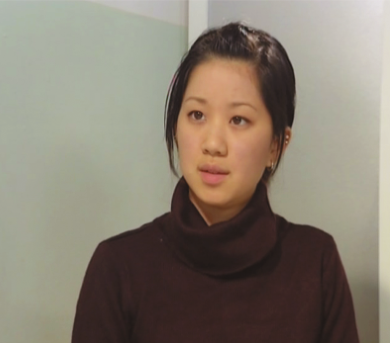
1) Watch the video again, with a female student doing Shelley’s voice.
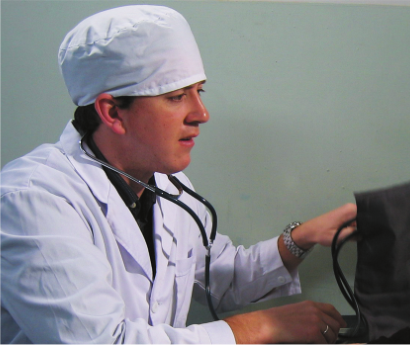
2) Watch the video once more, with a male student doing the doctor’s voice.
3) Watch the video one last time, with a male student and a female student doing both of the voices for the whole conversation.