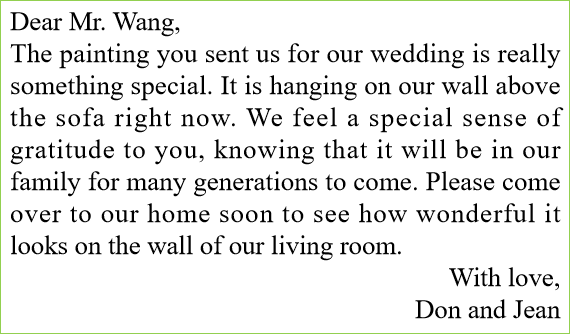
Translate the following thank-you note into Chinese, using the data bank for reference.
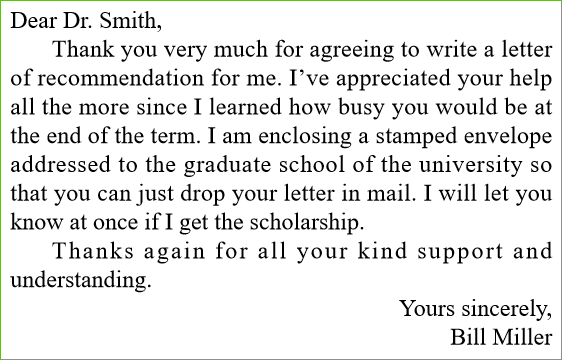
Data Bank
Giving Thanks — Replying to Thanks
1) Not at all. 这没什么。
2) I’m happy I could do that.我很高兴能这么做。
3) I’m glad to be of any help.我很高兴能帮助你/我很乐意助你一臂之力。
4) It’s my pleasure.这是我的荣幸。
5) It was nothing at all.一点儿也没关系。
6) No trouble at all.一点儿也不麻烦。
7) Don’t mention it.不用谢/没什么。
8) No problem.没问题。
9) You are welcome.不客气/不必客气。
Saying Sorry— Giving Apologies
1) I really apologize for that. 对此我真的很抱歉。
2) You must forgive me. 你一定得原谅我。
3) Oh, pardon me. 哦,请你原谅。
4) You must forgive me. It’s all my fault. 你一定得原谅我,这都是我的错。
5) I do apologize for all that I’ve done. 我为我所做的事道歉。
6) I just don’t know what to say. 我真不知该说什么才好。
7) How clumsy / careless / thoughtless / forgetful of me. 我多么笨拙/粗心/考虑不周/健忘啊!
8) It’s wrong of me to be late again. 我再次迟到是不对的。
9) I can’t tell you how sorry I am. 我无法表达我感到多么内疚。
10) I really didn’t mean it at all. 我真的是完全无意的。
Saying Sorry— Apologizing Beforehand
1) Excuse me, may I occupy / trouble / interrupt you a second?
对不起,我可以占用/打搅/打断您一会儿吗?
2) May I be excused? 我可以离开一下吗?
3) Excuse me. I won’t be long. / I’ll be right back.
对不起,我一会儿就回来/马上回来。
4) I’m afraid I have to leave you for a minute or two.
恐怕我得离开一会儿。
5) I wonder if you could excuse me for a short while.
不知您是否允许我离开一会儿。
Saying Sorry— Replying to Apologies
1) You don’t need to apologize. 你不必道歉。
2) You really don’t have anything to apologize for. 其实没有什么要道歉的。
3) Don’t let it worry / distress you. 别让这种事烦扰/困扰你。
4) I understand completely. / I quite understand. 我完全理解/相当理解。
5) It’s nobody’s fault. 这不是任何人的错。
6) Don’t think any more about it. 不要再去想它了。
7) I won’t hear of it. I might have done that myself.
你不必再多说了。我也许也会那样做的。
8) It isn’t worth mentioning, actually. 其实根本不值得一提。
9) Don’t dwell on it any longer. 别在这件事上多想了。
10) There’s nothing you could have done. 对此你也无能为力。
11) Let’s forget about it. 把这事忘了吧/这事到此为止。
冠词 (Articles)
冠词 (Articles) 冠词置于名词之前,用于区分该名词是特指还是泛指。冠词分不定冠词和定冠 词。a / an 是不定冠词,the 是定冠词。汉语中没有冠词。因此,漏用与错用冠 词成为英语写作中常见的错误之一,要特别注意。
① 不定冠词 a / an 不定冠词表示“一”或“某一”,用于可数名词的单数形式前。a 通常用在读音以辅音开头的单词前,an 通常用在读音以元音开头的单词前。如:a university ( 一所大学 ),an hour ( 一小时 )。
② 定冠词 the 定冠词用来特指某个/些人或事物,通常用于特指说话双方都知道的或上 文中已提到过的人或事物。定冠词还用来特指世界上独一无二的事物。 如:the man you met yesterday ( 昨天你遇到的那个人 ),the e-books in my iPad ( 我 iPad 里的那些电子书 ),the sun ( 太阳 )。
附:冠词详解
冠词是一种虚词,用在名词的前面,说明名词是特指的还是泛指的。冠词分不定冠词(Indefinite Article)、定冠词(Definite Article)和零冠词(Zero Article)三种。a(an)是不定冠词,the是定冠词。
不定冠词
不定冠词表示“一”“某一”这个概念,用于可数名词的单数形式前。a用在辅音开头的词前,在以元音开头的词前要用an。例如:
例句
| 译文 |
| Lily is a second year student. | 莉莉是一名二年级的学生。 |
| China is a big country. | 中国是一个大国。 |
| Mr Green is an English teacher. | 格林先生是一位英语老师。 |
定冠词
定冠词(the)特指某(些)人或某(些)事物,通常用来指说话双方都知道的或上文中已提到过的人或事物。也用来特指世界上独一无二的事物。例如:
| The moon looks both round and bright on the Mid-Autumn Festival. | 中秋节的月亮又圆又亮。 |
| I come to meet a plane. The plane has arrived at the airport now. | 我来接机。这架飞机现在已经抵达机场。 |
| The Chinese dishes at this banquet are very delicious. | 这次宴会上的中国菜非常美味。 |
| The city is at the side of the beautiful lake. | 这个城市坐落在美丽的湖畔。 |
零冠词
1)一般用在专有名词和不可数名词(抽象名词和物质名词)前。例如:China 中国,Class Three 三班,bravery 勇敢,paper 纸。
2) 名词前已有作为定语的this, that, my, their, whose, these, those, some, any, no, each, every等代词时。例如:
She is watering her flowers.
3) 泛指的复数名词表示一类人或是事物时。例如;
They are teachers.他们是教师。
It is time to plant trees. 是该种树的时候了。
4)在季节、月份、节日、假日、日期、星期等时间的名词之前。例如:
We go to school from Monday to Friday. 我们从星期一到星期五都上学。
Spring is the best season of the year.春天是一年中最好的季节。
5)在称呼或表示头衔和职务的名词之前。例如:
What's the matter, Granny? 奶奶,出了什么事?
6)在三餐饭、球类运动和娱乐运动的名称之前。例如:
play chess 下棋;play basketball 打篮球;have breakfast吃早饭(注意:弹奏的乐器前须加定冠词,如弹钢琴的表达是play the piano)。
Write a short passage of about 60 words to tell a story or describe an event related to the picture given below. Some useful words and phrases have been provided here to help you. You may start the passage with “Tomorrow will be New Year’s Day. Sally is going to ...”
• give thanks to her dentist, Mr. Milton;
• very kind and helpful;
• go to the dentist for an aching tooth;
• break Mr. Milton’s coffee pot by accident;
• feel very sorry;
• choose a new coffee pot;
• look very beautiful;
• attach a thank-you note...
Sample
Tomorrow will be New Year’s Day. Sally is going to give thanks to her dentist, Mr. Milton; Mr. Milton is very kind and helpful. A few days ago, when Sally went to the dentist for her aching tooth, she broke Mr. Milton’s coffee pot by accident. She felt very sorry for that. So she has chosen a new coffee pot for him. The new pot looks very beautiful. Sally will also attach a thank-you note to the pot.