Political Parties
The
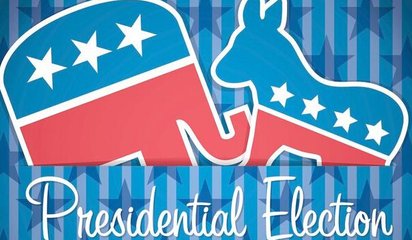
In 1874, Thomas Nast, an American famous cartoonist, drew a politicalpicture with a donkey representing Democrats and an elephant representingRepublicans.
The Republican Party is also called the Grand Old Party(GOP).
The Democratic Party
During theratification of the Constitution, the followers of Thomas Jefferson were calledthe Democratic-Republicans. During Andrew Jackson’s administration (1829-1837),the Democratic-Republican Party was changed into Democratic Party. ThomasJefferson was usually thought the first Democratic President. This party becamethe leading party before the Civil War.
TheRepublican Party
The Republican Partycame into being in 1854. it was a party of the northern capitalists who opposedslavery from their own political and economic interests. Abraham Lincoln wasusually considered as the first Republican President.
Voting and Elections
The Tuesday after thefirst Monday in November is regarded as the Election Day.
Before 1971 the onlystate that gave 18-yea-olds the right to vote was
Voting in the
Electing President
The law provides thatevery natural-born American citizen of and over 35 years of age and of being aresident within the United States for 14 years can run for the President. Butin fact only the candidates nominated by the two parties, the Republicans andthe Democrats, have the chance to win a Presidential election.
n The FirstStage:
The majorparties hold conventions to choose candidates for President and Vice Presidentand to determine the parties’ platforms.
n The SecondStage------campaigning stage
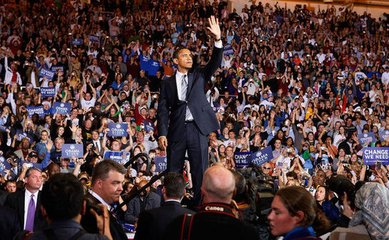
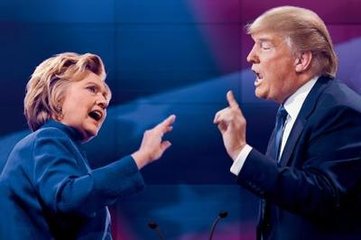
To win thePresidential election, a candidate has to conduct well-planed politicalcampaign so as to increase his popularity. A political campaign refers to thecompetitive effort of rival candidates to win support of the voters.
n The Third Stage
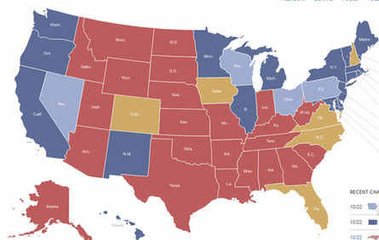
The thirdstage is the time for voters to choose the presidential electors in their statewho make up the Electoral College.The number of the Election College in each state is equal to that of itssenators and representatives in Congress. There are now 538 presidentialelectors. 535 from 50 states and 3 from Washington D.C. (without seats in Congress).
n The FourthStage:
If thereare three or more candidates, none of them receives more than half of theelectoral votes, the House of representatives will choose for President. If thesimilar case occurs in the election of the Vice Present, the Senate will choosethe Vice President.

