主题悦读

Lost without translation: scientific research
Accurate scientific translation is vital, say Meredith Root-Bernstein and Richard Ladle
June 26, 2014
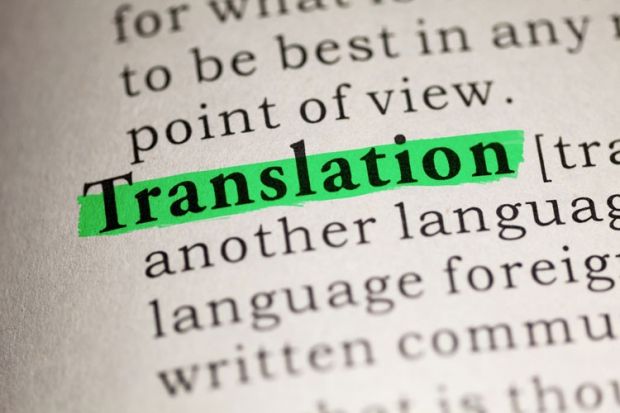
Universities could hire translators with a science background, just as they hire technical specialists
We all know that if you want to be a professional scientist in the 21st century, you have to communicate in English. This is not a problem if you are lucky enough to be born to English-speaking parents, but spare a thought for the majority of the world’s scientists who are forced to communicate the subtleties and significance of their research in an idiosyncratic foreign tongue.
A misplaced preposition or poor choice of verb can ruin a convincing narrative, reducing the probability of publication in a top international journal and limiting the impact of the research. Not only is this bad news for scientists struggling to communicate their work, it is also bad for science.
Science needs more trained personnel who can bridge the language gap. The need is particularly urgent in areas such as the environmental and agronomical sciences in which it is increasingly appreciated that regional and local interventions can have global impacts.
In an effort to disseminate their work, many foreign scientists spend precious research funds on private translation services. But standard translators may not understand the science, the structure of scientific papers or the technical language. The only alternative is to rely on bilingual colleagues to provide translation services as a favour.
But in a recent article in the journal Ambio: A Journal of the Human Environment, we suggest that university departments in non-anglophone countries could hire professional translators with a science background, just as they hire statisticians and technical specialists. Alternatively, they could offer attractive positions for bilingual or native English-speaking researchers, with a percentage of their time earmarked for assisting colleagues with translating, editing or writing papers and other research outputs. Such positions could be permanent or offered on a fixed-term basis to visiting academics.
Much less appreciated is the potentially important role of translators in universities in English-speaking countries. Translating research into any of the world’s main languages (Mandarin, Spanish, Portuguese or French) could boost a paper’s citation rate. Indeed, total productivity in environmental, biological and agricultural sciences for countries speaking those four languages accounts for a fifth of research published globally. The translation of papers into different languages should allow more rapid accumulation of data supporting or refuting hypotheses and increase knowledge sharing in applied areas, such as agronomy or conservation, where, in some countries, English-language publishing and citation is not currently pursued.
While we hope to see such new roles develop, individual researchers can also turn to some of the existing models for publishing translations. Some English-language journals in environmental, biological and agricultural sciences, for example, publish abstracts in Spanish or French. Some journals produce translations of papers originally published in overseas journals. Others publish papers in multiple languages – although, regrettably, some have dropped this practice.
Another idea would be for journals to provide online-only versions of original papers in translation; this could be offered as an option under the pay-to-publish open access model. Researchers themselves could post translations of their articles on their lab websites, or on scientific social networks such as Research Gate. Universities could develop online, freely available archives of their most significant research publications translated into targeted foreign languages. This could be a way for them to increase their international profile, creating new academic networks and new spaces for collaboration.
Science is never just about the data. The language in which we communicate affects our confidence and our ability to persuade, our expression of complex and nuanced ideas and information, and our judgements of the value of new ideas and their authors. One day, computers may be able to do accurate scientific translations, but until then scientists need all the help they can get.
From: https://www.timeshighereducation.com/

