
-
1 学习指南
-
2 听力训练8
-
3 听力训练9
-
4 章节测验
思维导图
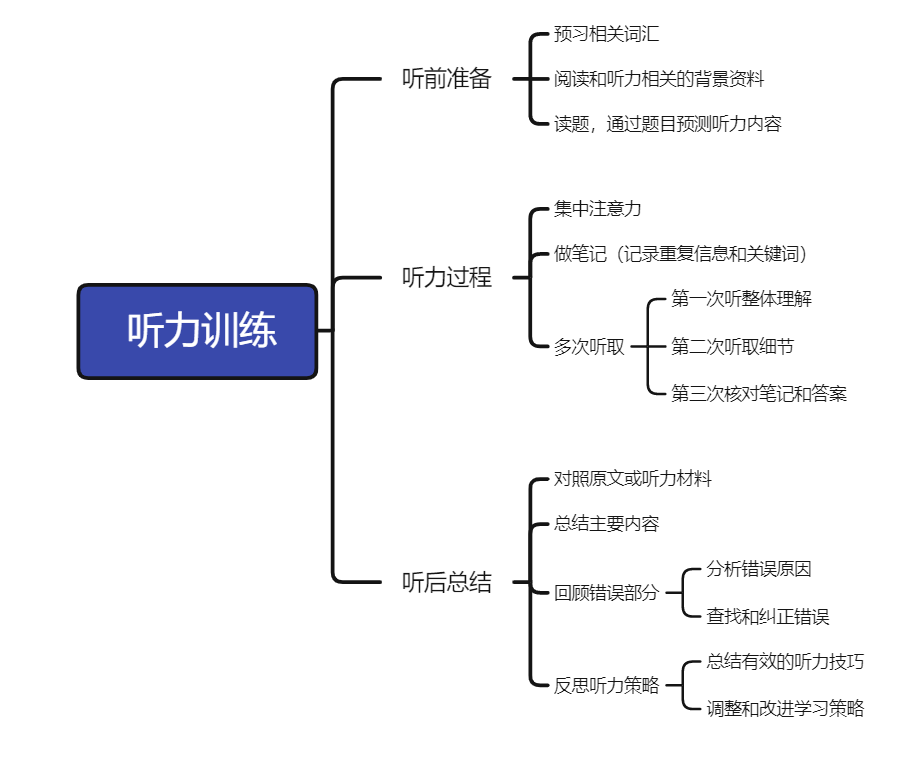
学习指南
教学评分细则
学习反思
听力材料(Lesson8) Emergency Situation (1)
 PartII Listening Skills
Task 1 Picture Listening
Lookat the pictures, listen carefully and choose what you hear.
1.A.Lifebuoy.
B.Lifeboat.
C.Life jacket.
D.Life raft.
2.A.Fireunder control.
B.Fire fighting.
C.Engine room flooding.
D.Fire is extinguished.
3.A. Breathing apparatus.
B.Toxic agent.
C.Corrosive agent.
D.Anti-explosion equipment.
4.A.The ship in good condition.
B.The fire under control.
C.The ship caught fire.
D.The fire-fighting drill.
5.A.Dangerous goods mark.
B.Ship mark.
C.Society mark.
D.Food mark.
6.A. Chemical extinguisher.
B.Carbon dioxide extinguisher.
C.Foam extinguisher.
D.Wheeled extinguisher.
7.A.Carbondioxide
extinguishingsystem.
B.Fire fighting station.
C.Portable extinguisher.
D.Wheeled extinguisher.
8.A.Carbon dioxide
extinguishingsystem.
B.Fire fighting station.
C.Portable extinguisher.
D.Wheeled extinguisher.
9.A. Portable extinguisher.
B.Fire fighting station.
C.Put out the fire.
D.Wheeled extinguisher
10.A.Fixed fire
extinguishingsystem.
B.Fire fighting station.
C.Portable extinguisher.
D.Wheeled extinguisher.
Task 2 Sentence Listening
Listento the following sentences carefully and choose the best one according to whatyou hear.
1.A. The main engine is abnormal.
B.The auxiliary engine is abnormal.
C.The prime engine is abnormal.
D.This is the main reason for engine trouble.
2.A.The blackout occurred due to generator current.
B.The blackout occurred due to generator speed.
C.The generator overload caused a blackout.
D.The blackout occurred due to generator over running
3.A.Please tell the captain that the main engine is in good order.
B.Please tell the captain to come and see the main engine.
C.Please tell the captain that we'll stop the main engine.
D.Please tell the captain that the main engine has gone wrong.
4.A.Bridge is on fire. B. Engine roomcaught fire .
C.Superstructure is on fire. D. Hold onfire.
5.A.We'll stop the main engine by nine.
B.It'll be dangerous to stop the main engine by them.
C.It won't be dangerous to stop the main engine by then.
D.If we stop the main engine by then, it won't be safer.
6.A. Fire is spreading. B. Fire is extinguished.
C.Flooding is under control.
D.Flooding is not under control.
7.A.He told me that a ship had collided with our ship.
B.I think our ship has been hit by another ship.
C.It sounds to me that a ship is calling our ship.
D.It seems to me that a ship is sailing towards our ship.
8.A. The main engine is out of order.
B.The main engine has slowed down.
C.The main engine is running smoothly.
D.The main engine has speeded up.
9.A.Carbon monoxide is needed to put out the fire.
B.The exhaust temperature might be low.
C.Put carbon dioxide into the scavenge box to put out the fire.
D.The exhaust temperature might be normal.
10.A.Our ship has collided with an unknown ship.
B.The collision was due to our fault.
C.The starboard bow of our ship has been struck.
D.No damage has been done to our ship.
Task 3 Dialogue Listening
Listento the following dialogues carefully and answer the questions according to whatyou hear
1.Q:Where is the ship probably?
A.At the wharf.
B.At sea.
C.In the dock.
D.In the shipyard.
2.Q:What is the situation at present?
A.Fire is spreading.
B.Fire is extinguished.
C.Flooding is under control.
D.Flooding is not under control
3.Q:What happened?
A.Stand-by generator broke down.
B.No. 2 generator was out of order.
C.No. 2 generator is the stand-by generator.
D.Keep No. 2 generator running.
4.Q:What will be done to treat the blackout?
A.Start stand-by generator after running emergency compressor.
B.Start emergency compressor.
C.Start the emergency generator with air provided by emergency compressor.
D.Make a try to start the emergency generator firstly.
5.Q:Why did the collision take place?
A.Our ship didn't halt in time.
B.A strong storm caused it.
C.Another ship didn't halt in time.
D.Our main engine was out of control.
6.Q:Where is the fire?
A.In the cargo control room.
B.In the steering gear room.
C.In the boiling room.
D.In the engine control room.
7.Q:When can we start the main engine?
A.We can start the main engine in no time.
B.We can finish the rush repairs in no time.
C.As soon as we started the main engine, the rush repairs were finished.
D.We can start the main engine once these repairs are finished.
8.Q:Which one of the following is true?
A.The second speaker is not satisfied with the first speaker.
B.The first speaker has done the perfect job.
C.The piston will be removed.
D.The cylinder liner will be removed.
9.Q:What happened?
A.The steering gear is repaired.
B.A fire occurred in the steering gear room.
C.The steering gear fails to function.
D.No fire has been found in the steering gear room.
10.Q:What happened to the main engine?
A.Turbocharger surging.
B.Cylinder knocking.
C.Piston scrapping.
D.Overload. Task
Task 4 Conversation Listening
Listento the following conversations carefully and answer the questions according towhat you hear.
Conversation 1
Ql: What happened?
A.Load indicator fails to work properly.
B.The speed of main engine cannot exceed 100 r/min.
C.Main engine governor has some trouble.
D.Electromagnetic 13 c breaks down.
Q2:How about the performance of the load indicator?
A.The pointer doesn't move with the increase of speed.
B.The pointer of the load indicator is blocked.
C.Load can be indicated normally before speed reaches to 100 r/min.
D.Something is wrong with the indicator.
Q3:What's the fault?
A.Reversing.
B.Shut down.
C.Not mentioned.
D.Slow down.
Q4:Which system might valve 30 c be in?
A.Fuel oil system.
B.Cooling water system.
C.Main engine remote control system .
D.Starting air system.
Conversation 2
Ql: What happened?
A.A fire.
B.A flooding.
C.A man overboard.
D.A collision.
Q2:Where is the accident?
A.In zone 0.
B.In zone 9.
C.In zone 19.
D.In No. 9 cargo hold.
Q3:How large is the accident?
A.Minor.
B.Serious.
C.Very serious.
D.Unknown.
Q4:Which of the following is true?
A.There is a lot of smoke and flame.
B.There isn't any smoke or flame.
C.There is a lot of smoke but no flame.
D.There is a lot of flame but no smoke.
Conversation 3
Ql: What problems do they have?
A.They have problems with auxiliary engine.
B.They have problems with main engine.
C.They have problems with bilge pump.
D.They have problems with ballast pump.
Q2: What caused the failure?
A.Fuel oil.
B.Lube oil.
C.Cooling water.
D.Power supply.
Q3: What is the second engineer going to do?
A.To stop the main engine.
B.To start the stand-by pump.
C.To repair the stand-by pump.
D.To replace the stand-by pump.
Q4:What is the second speaker going to do?
A.To start the main engine.
B.To start the stand-by pump.
C.To stop the main engine.
D.To stop the stand-by engine.
Conversation 4
Ql: What's the root cause to the blackout?
A.Two generators have stopped function. B.Onegenerator wears out.
C.Breakdown of one generator.
D.Unknown reasons.
Q2:What's the action to the blackout suggested by the chief engineer?
A.Start the emergency generator.
B.Start the emergency compressor.
C.Check the fuel oil pressure for the auxiliary engine.
D.Make some checks and start it again with a longer interval.
Q3:What will be run firstly after power is on?
A.Main engine.
B.Steering gear and some pumps.
C.No. 1 and No. 3 generator.
D.Air compressor.
Q4:Which one of the following might be wrong according the conversation?
A.The stand-by generator has been tried to be started for several times beforereport.
B.It might be the low lube oil pressure that causes the fault of starting thegenerator.
C.Main engine has stopped due to the blackout.
D.The stand-by generator was started after the chief engineer was on spot.
Conversation 5
Ql: How about the collision?
B.The collision was not very serious.
C.Our peak tank was struck by another ship's anchor.
D.The condition was so emergent that we had to abandon our ship.
Q2:What action is ordered after collision?
A.Abandon ship.
B.Cut off the anchor chains of the ship that caused collision.
C.Cut off the anchor chains of our ship.
D.Summon the chief engineer for consultation.
Q3:Which one of the following tools will be used for the cut?
A.Handsaw.
B.Grinding wheel.
C.Not mentioned.
D.Gas-cutting machines.
Q4:Which one of the following is true according to the conversation?
A.The chief engineer was sure of the exact time taken for cutting.
B.If the gas tube were long enough, the bottle would be no necessary to be moved.
C.The chief engineer was unsure of the time needed to move the bottle to deck.
D.Rough sea was the root cause of the collision.
Script
PartIII Speaking Skills
Task1 Reading Practice
Read aloud thefollowing passages and pay attention to the pronunciation and intonation.
Passage1
In the case of a fire in theengine room, each person on board has to carry out his assigned duty. Eachperson has a specific task to do. Fire drills are conducted as soon as the shipdeparts on a long journey. Usually it is about one day after departure.
Engineering staffs will attend toequipment in the engine room. In case of fire in the machinery space, theengineering staffs will play the major role in controlling the fire, andputting it out. In case of fire on the deck, the navigation staffs will be thefrontline fire fighters, while the engineering staffs will play a supportingrole.
In a normal situation, thecaptain and the chief engineer will be overall in charge of the fire-fightingoperation, and the chief officer and the second engineer officer will assistthem.
Passage2
Engine room preparations forcollision are as follows:
The chief engineer should go tothe engine room quickly and command other duty personnel to prepare formaneuvering the main engine; reduce the speed of the main engine while the shipis in shallow water and ask for information from the bridge frequently; changethe low-level sea chest to a high one; sound relevant tanks.
Task2 Answer the Questions
1. As soon as you hearthe fire and emergency signal, what should you ensure?
2. How do you put itout when you come across the fire caused by electrical equipment?
3. When the fire alarmis sounded continuously, what should the engine room personnel do?
4. If a warning of acrankcase explosion is received, what steps should be taken right away?
5. What is essentialbefore checking any kind of electrical equipment?
6. What actions shouldyou take if the exhaust temperature of the main engine is excessive high?
7. In the event ofblackout, what should you do as a chief engineer?
8. How many types ofextinguishers do you know? List some.
9. In the event ofcollision, what should you do?
10. What should bedone before carbon dioxide is released to the engine room?
Task3 Topic Talks
1. Talk about thefire-fighting equipment on board.
2. Talk about actionsto be taken when a fire occurs in the engine room.
3. Talk about actionsto be taken in the event of collision.
4. Talk about actionsto be taken when a blackout occurs in the engine.
听力材料(Lesson9) Emergency Situation (2)
Part ⅠWarm-up Activities Useful Expressions
1.Sea water is flooding into the engine room.
2.Inform all personnel to evacuate from the flooded engine room to boat deck.
3.How was he injured?
4.Can you stop
5.How about the flooding?
6.Man overboard!
7.All escape routes clear.
8.Is there any oil leakage?
9.Report the emergency situation to the captain at once.
10.Don’t panic. Put on your lifejacket.
Part ⅡWarm-up Activities
Task 1Picture Listening
Look at the pictures, listen carefullyand choose what you hear.
1. A. Ship sinking. B. Ship listing.
C. Ship grounding. D. Ship collision.
2. A. Ship collision. B. Ship grounding.
C. Ship listing. D. Ship flooding.
3.A.Ship listing. B. Ship grounding.
C. Ship collision. D. Ship flooding.
4. A. Ship listing. B. Ship grounding.
C. Ship collision. D. Ship flooding.
5. A. Pirate. B. Pilot.
C. Dangerous. D. Killer.
6. A. Ship listing. B. Ship grounding.
C. Ship collision. D. Ship flooding.
7. A. Lifebuoy. B. Life jacket.
C. Lifeboat. D. Helmet.
8. A. Lifebuoy. B. Lifeboat.
C. Barge. D. Passenger ship.
9.A.Safety helmet. B..Life jacket.
C. Lifebuoy. D. Lifeboat.
10. A. Life raft. B. Life jacket
C. Lifeboat. D. Helmet.
Task 2 Sentence Listening
Listen to the following sentencescarefully and choose the best one according to what you hear.
1.A. Fresh water is flooding into theengine room.
B. Engine room is being flooded by seawater.
C. Engine room is on fire.
D. No water is flooding in the engineroom.
2. A. Flooding is not spreading.
B. Flooding is not under control.
C. Fire is under control.
D. Fire is not under control.
3. A. Man overboard on starboardside.
B. Man fell into the sea on port side.
C. Man dead on starboard side.
D. Man dead on port side.
4.A. The lube oil should becleaned.
B. The lube oil is in good condition.
C. The lube oil should be renewed.
D. The lube oil should be poured.
5. A. Flooding in after peak.
B. Fire in fore peak.
C. Fire in after peak.
D. Water entering fore peak.
6.A. Regain the breath of the injuredperson by mouth to mouth.
B. Send the casualty to a safe place.
C. Send the casualty to a hospital.
D. Feel the pulse of the casualty.
7.A. This morning the pains becomebad.
B. This morning the pains got bad.
C. This morning the pains disappear.
D. This morning the pains are gettingworse.
8.A. Such a large flow is caused by seawater piping leakage.
B. The sea water piping leakage cannotcause such a large flow.
C. Such a large flow speed causes thesea water piping to leak.
D. Sea water piping leakage causes sucha large flow.
9. A. Water tank is overflow.
B. Oil spills out of oil tank.
C. Oil filling line is leaky.
D. Oil flows out from a pipeline.
10. A. Give me technicalassistance.
B. Tell him technical assistance.
C. Give me medical assistance.
D. I need chemical compounds.
Task 3Dialogue Listening
Listen to the following dialoguescarefully and answer the questions according to what you hear.
1.Q: What has happened?
A. Cargo hold is flooding.
B. Engine room is flooding.
C. Chief engineer is blooding
D. Somebody is blooding.
2.Q: How about escape routes?
A. Damaged.
B. Blocked.
C. Iced.
D. Cleared.
3.Q: Who is seriously injured?
A. The engineer.
B. The electrician.
C. The motorman.
D. The third engineer.
4.Q: What happened probably?
A. Oil spillage.
B. Collision.
C. Fire.
D. Aground.
5.Q: Where is the oil leakage?
A. Out of the fuel tank.
B. From the hull.
C. From the filling line.
D. No oil leakage.
6.Q: What is the situation at present?
A. Flooding is not spreading.
B. Flooding is not under control.
C. Fire is under control.
D. Fire is not under control.
7.Q: What happened?
A. Man overboard on starboard side.
B. Man dead on port side.
C. Man dead on starboard side.
D. Man overboard on port side.
8.Q: What will the first speaker do?
A. He will raise the patient'stemperature.
B. He will reduce the patient'stemperature.
C. He will take the patient'stemperature.
D. He will measure the paint's blood.
9.Q: Why they did not find out theflooding cause?
A. There were not enough tools.
B. There were not enough crews.
C. There was not enough water.
D. There was not enough time.
10.Q: How about engine room?
A. Nobody inside.
B. Oily.
C. Rusted.
D. Tidy.
Task 4Conversation Listening
Listen to the following conversationscarefully and answer the questions according you hear.
Conversation1
Q l: What happened?
A. Engine room is flooding.
B. One ship moves to our ship.
C. Sea water pump breaks down.
D. Oil spills overboard.
Q2: Have they found where the watercomes from?
A. Yes they have.
B. No, they have no time to detect thecause.
C. Yes, they did.
D. No they didn't.
Q3: What docs the second speaker ask thefirst to do?
A. Open the inlet valve.
B. Discharge sea water.
C. Not mentioned.
D. Put out fire.
Q4: How is the flooding proceeding?
A. The situation is getting better.
B. The flooding is under control.
C. The situation is getting worse.
D. The flooding is stopped.
Conversation2
Q l: What is the accident?
A. A spillage.
B. A flooding.
C. A fire.
D. A collision.
Q2: Where is the accident?
A. On the fore deck starboard side.
B. On the aft deck starboard side.
C. On the aft deck port side.
D. On the fore deck port side.
Q3: How large is the accident?
A. Very serious.
B. Serious.
C. Minor.
D. Unknown.
Q4: How about the situation?
A. Spreading.
B. Not under control.
C. Not mentioned.
D. Under control.
Conversation 3
Q l: What are the two speakers talkingabout?
A. Response to the collision.
B. Response to oil leakage whenbunkering.
C. Response at rough sea.
D. Response to oil spill at sea.
Q2: What's the first method suggested bythe captain to eliminate the oil?
A. Coagulant.
B. Dispersant.
C. Boom.
D. Oil sorbent felt.
Q3: Which one might not be the furtheraction against the oil leakage?
A. Gather crew members to manuallyrecover oil.
B. Abandon ship.
C. Wait for the oil clearance team onshore.
D. Burn the oil.
Q4: Which one of the following is nottrue according to the conversation?
A. The oil spill will be under controlafter oil sorbent felts are used.
B. Shipboard Oil Pollution EmergencyPlan is available.
C. Boom might have little effect againstoil spill under such condition.
D. Oil sorbent felt will be moreeffective than boom under such condition.
Q l: What happened to the patient?
A. He fell off the ladder.
B. He broke his left foot.
C. He was injured by a wood block.
D. He fell from the crane and wasinjured.
Q2: How about the patient when the firstspeaker arrived?
A. He was lightly injured.
B. He was unconscious.
C. He was dead on the spot.
D. Not mentioned in the dialogue.
Q3: How was the patient saved?
A. By mouth-to-mouth breathing.
B. By calling.
C. By injection.
D. By surgery.
Q4 : Which one of the following is nottrue according to the conversation?
A. The patient lost his consciousness.
B. The patient comes to hisconsciousness after the first aid.
C. The patient didn't want to lie down.
D. The patient had medical treatment.
Conversation5
Q l: What are they going to do?
A. To leave the engine room.
B. To start all the running machines.
C. To open watertight doors.
D. To make all efforts to remove thetrouble of the main engine.
Q2: What will the second engineer do?
A. To shut off the emergency valves offuel oil tanks.
B. To seal off boilers.
C. To secure the watertight doors.
D. To start the emergency generator.
Q3: What will the fourth engineer do?
A. To shut off the emergency valves offuel oil tanks.
B. To seal off boilers.
C. To secure the watertight doors.
D. To start the stand-by generator.
Q4: Which statement is not trueaccording to the conversation?
A. Every crew member in the engine roomis awaiting orders.
B. The second engineer is going tosecure all the ventilators.
C. The third engineer is going to cutoff oil supply.
D. The fourth engineer is going to stopboilers.
Script
Part ⅢSpeaking Skills
Task 1 Reading Practice
Readaloud the following passages and pay attention to the pronunciation andintonation.
Passage 1
Emergencyresponse to engine room flooding:
1)Secure all watertight doors, hatches and ventilators to ensure maximumavailable watertight integrity.
2)All available pumps, including portable salvage pumps, are to be immediatelyutilized to control the ingress of water.
3)Find the leaks and try to stop it with a collision-mat (blanket,cotton-wadding, etc.), steel patch or concrete patch.
Passage 2
Incase of oil spill on board, firstly it should be reported to the master, thenactions taken according to the SOPEP. If it is out of control, and the shipcannot handle it, the master should ask the port authorities for help andassistants. All crewmembers should control the oil spill under themaster’s command. They should try their best to remove oil spilled.
Finally,all the activities above should be recorded in the Oil Record Book, including:when occurred, position of the ship when occurred, approximate quantity andtype of oil and so on.
Task 2 Answer the Questions
1.What immediate actions should be taken for engine room flooding?
2.If you found an oil spill in the sea, how would you react?
3.How do you treat the injured person who is not breathing?
4.How do you test the engine for the lifeboat?
5.What are materials for oil pollution prevention?
6.What is the alarm signal for oil spill?
7.What is the alarm signal for a man falling overboard?
8.What can be used to prevent spilt oil from spreading out in the event of oilspill?
9.What life-saving devices are equipped on board your ship?
10.How do you evacuate from the engine room upon abandon ship order?
Task 3 Topic talks
1.Talk about the Muster List.
2.Action to be taken in the event of flooding.
1)Action in full compliance with the Muster List.
2)Action to be taken in terms of notifying, locating, restricting, and handling.
3.Talk about the actions to be taken in the event of a man falling overboard.
1)Shouting and notifying.
2)Take measures to rescue the person falling overboard.
4.Talk about an abandon ship dill.

